
There is a moment, just before guests sit down, when a table either looks arranged or looks assembled. The plates are the same in both cases. The glasses are the same. What usually separates the two is the napkin — the one element most of us treat as an afterthought and drop beside the fork on the way to the kitchen.
It is a small thing that carries a surprising amount of weight. A folded napkin is the only object on the table that shows a decision was made. Everything else has to be there; the napkin has to be placed.
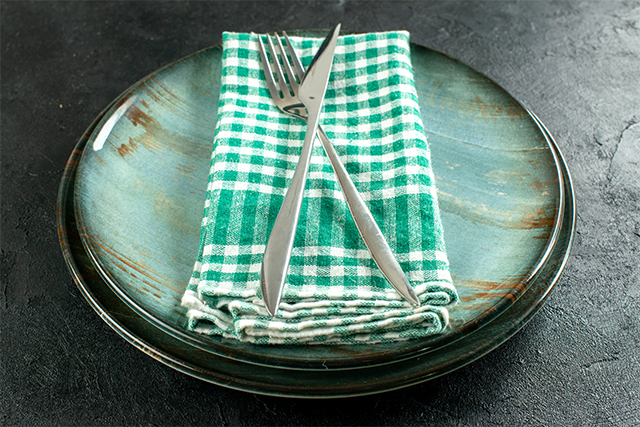
Why the napkin became the finishing touch
The habit is older than the dinner party. In sixteenth-century European courts, folding linen was a genuine craft, closer to sculpture than to housekeeping, and elaborate folds were part of the spectacle of a banquet. By the nineteenth century the display had calmed down into something more practical, and the fold shrank to a manageable set of shapes that a household could actually produce every evening.
What survived is the idea, not the theatrics. A fold signals attention. That is why it still reads as generous even at a weeknight table, and why a beautifully laid table with a crumpled napkin never quite convinces.
Three folds that actually work at home
Most napkin tutorials collapse under real conditions: they need starched linen, a flat surface the size of a desk, and twenty minutes you do not have. Three shapes survive contact with an ordinary Tuesday.
The pocket. The napkin is folded into a rectangle with a small opening along one edge, and the cutlery slides in. It is the most forgiving fold — it hides an imperfect edge, it holds its shape while people are arriving, and it solves the question of where the knife and fork go. On a narrow table it also buys you a few centimetres of room, which matters more than it sounds.
The fan. Concertina pleats across the width of the napkin, folded in half, then propped up so the pleats open. It needs a napkin with some body — a limp cotton one will slump — but it gives height, and height is what most home tables lack. Standing in a glass, it draws the eye upward and makes the whole setting look taller and more deliberate.
The roll with a ring. The plainest of the three and the one professionals fall back on. The napkin is rolled loosely, not tightly, and held with a ring, a length of ribbon, or a sprig of something from the garden. It takes fifteen seconds and it never looks careless, which is exactly why restaurants use it.
Once those three are comfortable, the rest of the repertoire opens up quickly — the bishop’s hat, the lotus, the envelope, the fold that turns into a pouch for a place card. Anyone who wants the full sequence, with the classic shapes explained properly rather than in a rush, will find how to fold a dinner napkin a far more complete starting point than the usual scattering of video clips.
The fabric decides more than the fold
A fold is only as good as the cloth holding it. Linen creases sharply and holds an edge, which is why it photographs well and why it feels expensive in the hand; it also wrinkles the moment someone leans an elbow on it, and that is part of its character rather than a flaw. Cotton is softer, more forgiving in the wash, and better suited to folds that rely on drape rather than structure. Blends sit somewhere in between and rarely hold a crisp pleat.
Size matters more than people expect. A dinner napkin should be generous — around 50 cm square — because anything smaller stops being a napkin and starts being a coaster with ambitions. Press it while it is still slightly damp, and if you want a fold that stands up on its own, a light spray starch on the reverse side is the difference between a fan and a sagging triangle.
Making it part of the whole table
The napkin should not be the loudest thing in front of a guest. It works best when it repeats something already present: the tone of the tablecloth, the shape of a place card, the line of a crystal stem. On a table set with fine glassware, a plain fold with a good ring will always beat an elaborate one competing for attention — the glassware is doing the work, and the linen is there to frame it.
Seasonal tables are where this discipline pays off most. If you are already thinking about setting a memorable holiday table, the napkin is the cheapest variable you have: the china stays the same year after year, but a different fold, a different colour, a sprig of rosemary tucked into a ring, and the table reads as new.
The point of the exercise
None of this is about performing sophistication. It is about the difference between a table that says sit down and one that says we were expecting you. Two minutes per place setting, a cloth napkin instead of a paper one, and a fold you can do without thinking — that is the entire investment.
The food will still be the reason people came. But they will notice the napkin first, and they will remember that someone bothered.