
For decades, scientists believed that the ability to understand language concepts was one of the defining features of human intelligence. While many animals can respond to commands or recognize sounds, true language comprehension was considered a uniquely human skill.
Now, a remarkable new discovery is forcing researchers to rethink that assumption.
Studies involving exceptionally talented dogs have revealed that some can do far more than simply react to familiar commands. These dogs appear capable of understanding words, concepts, and even the function of objects in ways that closely resemble the learning patterns of young children.
The findings are generating excitement among scientists and dog lovers alike because they suggest that canine intelligence may be much more sophisticated than previously imagined.
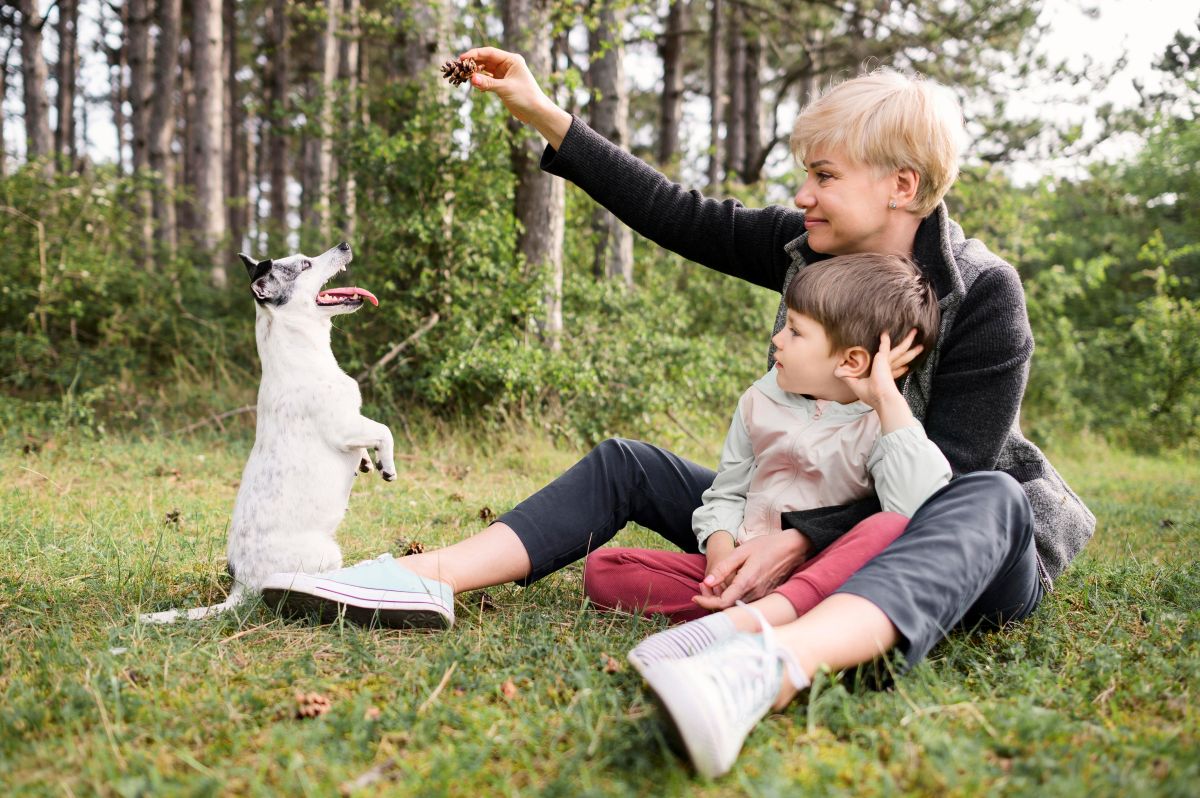
Dogs Do Not Just Learn Words, They Learn Meaning
Most dog owners know that their pets can recognize words like “walk,” “food,” or “ball.” Until recently, many researchers believed dogs were mainly responding to associations built through repetition and rewards.
The latest research suggests something deeper is happening.
Certain dogs are able to connect words with categories and concepts rather than simply memorizing sounds. This means they may understand what a word represents, not just that it predicts a reward or activity.
Researchers found that some dogs could identify unfamiliar objects based on their understanding of previously learned concepts. This behavior resembles the way young children expand their vocabulary by connecting new words to categories they already understand.
In other words, these dogs are not merely remembering labels. They are building mental frameworks that help them interpret the world around them.
Border Collies Continue to Impress Scientists
When it comes to canine intelligence, one breed consistently stands out: the Border Collie.
For years, Border Collies have amazed researchers with their ability to learn hundreds of object names. Some have demonstrated vocabularies comparable to those of toddlers.
These extraordinary dogs are often referred to as “gifted word learners” because of their unusual capacity to associate words with specific objects and remember them over long periods.
During recent studies, many of the dogs showing advanced language-like abilities belonged to this breed. Researchers observed that they could recognize patterns, distinguish between categories, and apply previous knowledge to entirely new situations.
Their performance suggests that at least some dogs possess cognitive skills that go far beyond basic obedience training.
Understanding Function Without Being Told
Perhaps the most surprising finding from the research is that dogs appear capable of understanding the function of objects without receiving direct verbal explanations.
Scientists discovered that some dogs could infer information about unfamiliar objects by observing how they were used. Instead of relying solely on spoken cues, the dogs seemed able to connect actions, purposes, and categories independently.
This ability is particularly significant because it mirrors an important aspect of human learning. Children often learn about the world not only through language but also through observation and context.
The fact that dogs may be capable of similar reasoning opens an entirely new area of study in animal cognition.
Researchers believe this demonstrates a level of conceptual thinking that has rarely been documented in non-human species.
What This Means for the Evolution of Language
The implications of these findings extend far beyond understanding dogs.
Language is often considered one of humanity’s most important evolutionary achievements. If dogs can process words and concepts in more advanced ways than previously believed, scientists may need to reconsider how language-related abilities evolved across species.
The discovery could provide valuable clues about the origins of communication, learning, and intelligence. It also raises fascinating questions about which cognitive abilities are uniquely human and which may be shared with other animals.
Researchers hope future studies will reveal whether similar skills exist in other species and how these abilities developed over time.
A New Era in Understanding Animal Intelligence
Dogs have shared their lives with humans for thousands of years. They have worked beside us, protected us, and become beloved members of our families.
Yet despite this long history, science is still uncovering surprising truths about how their minds work.
The latest research suggests that some dogs are capable of understanding far more than simple commands. They can connect words to concepts, learn from observation, and apply knowledge in ways once thought possible only for humans.
While dogs may not speak our language, they may understand much more of it than anyone ever imagined.
As scientists continue exploring the remarkable abilities of these four-legged learners, one thing is becoming increasingly clear: the gap between human and animal intelligence may be smaller than we once believed.