
In industrial production, environmental pollution from waste gas emissions is becoming increasingly serious, posing a significant threat to human health and ecological balance. Volatile organic compounds (VOCs), hazardous air pollutants (HAPs), and unpleasant odors permeate the air, becoming stumbling blocks on the path to sustainable development. Regenerative thermal oxidizer (RTO), as a highly efficient air pollution control device, converts these harmful substances into harmless carbon dioxide (CO₂) and water vapor (H₂O) through thermal oxidation, playing a crucial role in industrial waste gas treatment. It not only effectively reduces harmful emissions but also enables energy recovery and reuse, helping companies meet clean air regulations. It has become one of the most widely used emission control technologies today, bringing a glimmer of hope for sustainable industrial development.
Core Definition & Purpose
At its core, an RTO is designed to address industrial air pollution by leveraging heat to break down pollutants. Industrial processes across sectors like manufacturing, painting, and chemical production often release VOCs and HAPs, which pose risks to public health and the environment. The RTO eliminates these contaminants by exposing them to high temperatures, ensuring they are converted into inert byproducts before being exhausted to the atmosphere.
Beyond pollution control, RTOs prioritize energy efficiency through regenerative heat recovery. This feature sets them apart from other oxidizers, as they reuse the heat generated during oxidation to preheat incoming polluted air—drastically reducing auxiliary fuel needs and operational costs.
How Does a Regenerative Thermal Oxidizer Work?
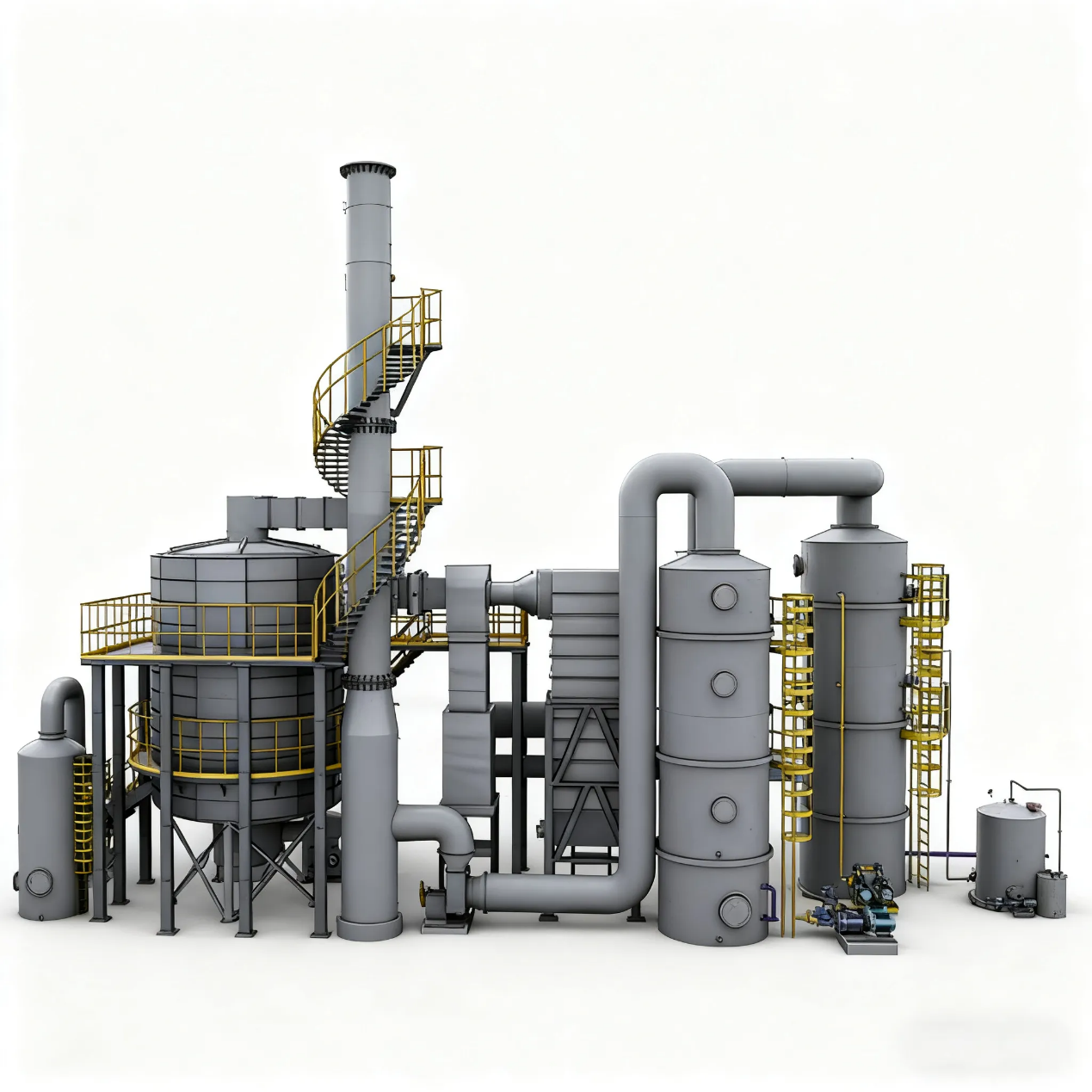
The RTO’s operation revolves around a cyclical process of heat capture, oxidation, and heat reuse, driven by ceramic heat exchange media and automated valves. Here’s a step-by-step breakdown:
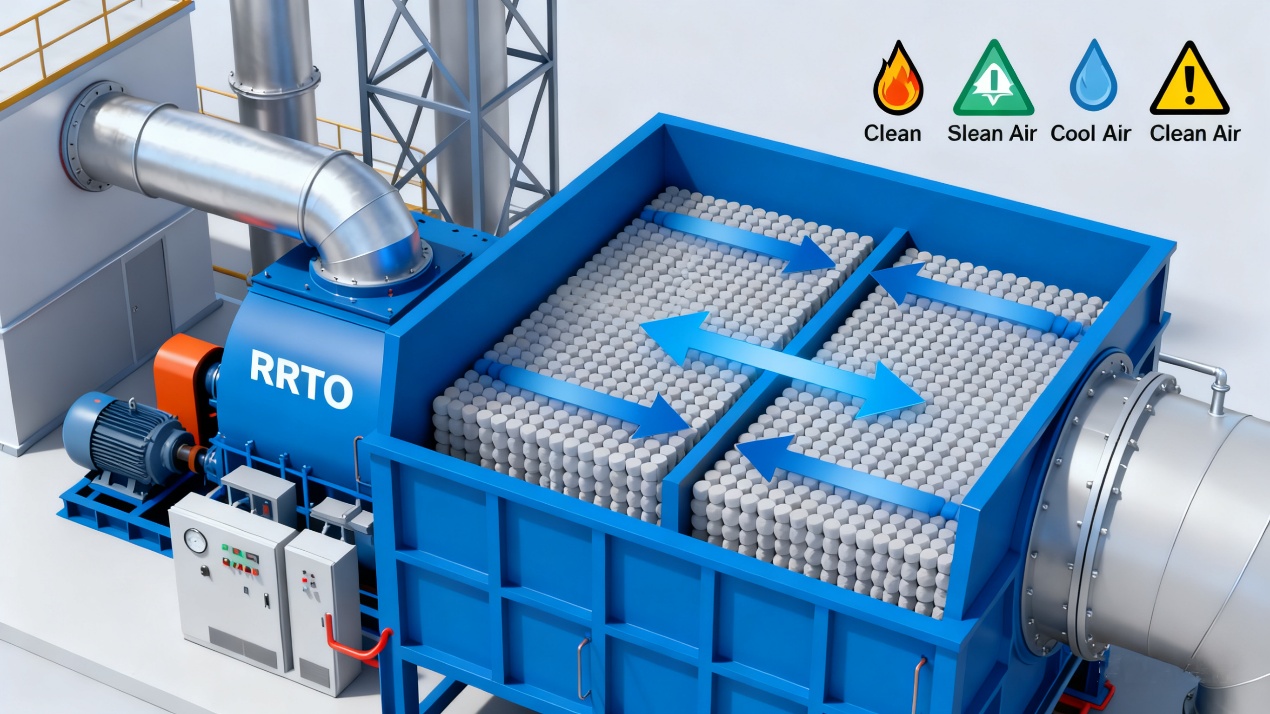
- Pollutant Inlet: VOC-laden process exhaust air is drawn into the RTO via a booster fan and directed toward one of the system’s regenerators (insulated vessels filled with ceramic media).
- Preheating: The polluted air passes through the ceramic media, which absorbs heat from previous cycles. This preheats the air to near-oxidation temperatures, minimizing the need for additional heating.
- Oxidation: The preheated air enters the combustion chamber, where it is heated to 1400°F–1600°F (or higher) to complete VOC destruction. Minimal auxiliary heat is required here, thanks to the preheating step.
- Heat Recovery: The clean, hot air from the combustion chamber flows through a second regenerator, transferring its heat to the ceramic media. This cools the clean air while recharging the media for the next cycle.
- Exhaust: The cooled, purified air is released into the atmosphere via a stack. Every 3 minutes, poppet valves reverse airflow direction, switching the roles of the regenerators to maintain continuous heat recovery.
- Safety Monitoring: A Temperature Safety System (TSS) tracks temperatures in the regenerators, combustion chamber, and valve assemblies to prevent thermal stress and ensure safe operation.
This regenerative cycle enables thermal efficiencies of up to 97%, far exceeding many other emission control technologies.
Key Design Principles: Time, Temperature, Turbulence
Like all thermal oxidizers, RTOs rely on three critical factors to achieve optimal pollutant destruction:
- Time (Retention/Residence Time): The duration VOCs spend in the combustion chamber at oxidation temperature—ensuring complete breakdown.
- Temperature: The combustion chamber is maintained at 1400°F–1600°F, tailored to the specific VOCs being treated.
- Turbulence: Proper air mixing in the combustion chamber guarantees uniform heat distribution, ensuring all pollutants are exposed to oxidation temperatures.
Ever-Power Pte. Ltd., a leading RTO manufacturer, custom-engineers systems to balance these principles, matching them to the unique characteristics of each industrial air stream (e.g., volume, temperature, VOC composition).
Types of Regenerative Thermal Oxidizers
RTOs are primarily differentiated by their chamber configurations, which dictate destruction efficiency and application suitability:
- Two-Chamber RTO: The standard design, offering thermal efficiencies up to 97% and destruction efficiencies (DRE) exceeding 98%. Adding a VOC entrapment chamber boosts DRE to 99%. Air volume ranges from 2,000 to 80,000 scfm, with tandem operation or pairing with a Rotary Concentrator extending capacity to 180,000 scfm.
- Three-Chamber RTO: Ideal for odor control and high-purity requirements, delivering DRE of 99.9%. The third chamber enhances heat recovery and ensures consistent performance.
- Modular RTO: Built with a modular approach (e.g., Our 2-tower regenerator system with EvenFlo Valve Manifold) for cost-effective installation and factory-aligned components.
Valve design also varies—Our Posi-Seal poppet valves feature air-tight seals to eliminate bypass and reduce maintenance, while shaft cooling systems extend component life.
RTO vs. Recuperative Thermal Oxidizer: Key Differences
The primary distinction lies in heat recovery technology:
- Regenerative Thermal Oxidizer: Uses ceramic media for heat exchange, with airflow reversal to capture up to 97% of exhaust heat. Ideal for large airflows and low VOC concentrations, offering lower operating costs.
- Recuperative Thermal Oxidizer: Relies on metal plate or shell-and-tube heat exchangers, achieving up to 80% thermal efficiency. Better suited for applications requiring 99.99% DRE but with higher fuel consumption.
RTOs are preferred for most industrial processes due to their superior efficiency, reliability, and long-term cost savings.
Core Features of Regenerative Thermal Oxidizers
Our RTO systems integrate innovative design elements to maximize performance and minimize lifecycle costs:
- Modular Generator Technology: Customizable, cost-efficient designs with factory-installed valves for easy installation.
- Cold Face Support System: A superior grid design (vs. perforated plates) reduces pressure drops and enhances structural integrity.
- Ceramic Heat Exchange Media: Layered or mixed media (structured/random) tailored to application needs, with bake-out features for residue cleaning.
- Internal Isolation & Manifold Insulation: Reduces shell temperatures, retains heat, and prevents pollutant condensation.
- Extensive Materials Selection: Corrosion and heat-resistant metals for durability in harsh environments.
- Complete Shop Assembly: Pre-wired, media-loaded systems for drop-in-place installation and quick commissioning.
RTO Product Options for Customization
To meet specific industrial needs, we offers a range of optional features:
- Hot Gas Bypass: Controls high VOC loads to avoid overheating and shutdowns.
- Secondary Heat Recovery: Direct/indirect heating systems (air-to-air, air-to-water, etc.) for energy reuse.
- Induced Draft Systems: Keeps booster fans free of condensation.
- Natural Gas Injection (NGI): Supplements fuel for low VOC loads and reduces NOx emissions.
- SD (Severe Duty) Series: Resists corrosion from halogenated compounds (chlorine, fluorine).
- PLC & HMI Controls: Tailored to operational needs for easy monitoring.
- VOC Polishing Chamber: Boosts two-chamber RTO DRE to 99%.
- Footprint Flexibility: Custom designs to fit limited space.
Industrial Applications & Case Studies
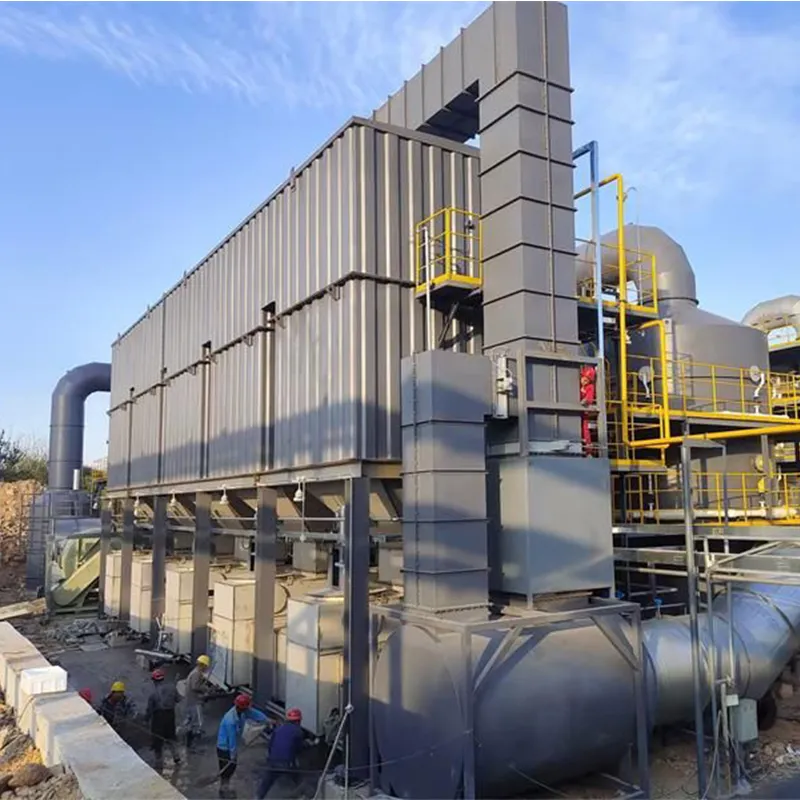
RTOs are versatile and proven across numerous industries, with tailored solutions solving unique emission challenges. Below are detailed case studies demonstrating their impact:
1. Automotive Paint Shop (60,000 SCFM RTO)
- Challenge: A global automotive manufacturer needed to control VOC emissions from its spray painting lines, which released solvents (e.g., acetone, toluene) at high airflow rates (60,000 scfm). The system required compliance with strict EPA emissions standards and minimal fuel consumption.
- Solution: Ever-Power installed a custom two-chamber RTO with a VOC polishing chamber, Posi-Seal poppet valves, and secondary air-to-air heat recovery. The design incorporated the EvenFlo Manifold to prevent solvent condensation.
- Results: Achieved 99% DRE and 96% thermal efficiency, cutting annual fuel costs by $180,000 compared to the previous recuperative oxidizer. The system seamlessly integrated with the plant’s existing production line, operating 24/7 with minimal maintenance.
2. Chemical Processing Plant (Halogenated Compound Treatment)
- Challenge: A chemical facility producing industrial adhesives emitted corrosive halogenated VOCs (containing chlorine) and required a system resistant to chemical attack. The plant’s limited floor space also demanded a compact design.
- Solution: Ever-Power delivered an SD (Severe Duty) Series two-chamber RTO with corrosion-resistant stainless steel metallurgy and a modular footprint. The system included a hot gas bypass to handle variable VOC loads.
- Results: Maintained 98.5% DRE despite fluctuating pollutant concentrations, with zero corrosion-related downtime over three years. The compact design fit within the plant’s existing space, avoiding costly facility modifications.
3. Electronics Fabrication (Odor & HAP Control)
- Challenge: An electronics manufacturer’s circuit board assembly process released low-concentration HAPs (e.g., formaldehyde) and odorous compounds, requiring near-complete destruction (99.9% DRE) to meet local air quality regulations.
- Solution: A three-chamber Ever-Power RTO with advanced TSS controls and ceramic media optimized for low VOC loads. The system included PLC integration with the plant’s SCADA system for real-time monitoring.
- Results: Consistently achieved 99.9% DRE, eliminating odor complaints from nearby communities. The TSS control system reduced energy waste by adjusting valve timing based on process conditions, lowering electricity costs by 12%.
4. Large-Scale Printing Facility (120,000 SCFM Tandem RTOs)
- Challenge: A commercial printing plant with multiple flexographic presses generated 120,000 scfm of exhaust containing ink solvents (e.g., ethanol, ethyl acetate). The facility needed a scalable solution to handle future production growth.
- Solution: Ever-Power installed two 60,000 scfm two-chamber RTOs in tandem, paired with a Rotary Concentrator to optimize airflow. The modular design allowed for easy expansion, and natural gas injection (NGI) supplemented low VOC periods.
- Results: Achieved 98.8% DRE and 97% thermal efficiency, supporting a 30% increase in production without emissions violations. The NGI feature reduced NOx emissions by 20%, while the tandem configuration provided redundancy for uninterrupted operation.
5. Can Production Plant (High-Temperature Exhaust Treatment)
- Challenge: A metal can manufacturing facility’s coating process produced high-temperature exhaust (350°F) with VOCs from epoxy coatings. The plant sought to reuse waste heat to reduce overall energy consumption.
- Solution: A Ever-Power two-chamber RTO with air-to-water heat recovery, which captured waste heat to preheat the plant’s boiler feedwater. The system’s cold face support grid handled the high-temperature airflow without pressure drop issues.
- Results: Recovered 500,000 BTUs per hour of waste heat, reducing boiler fuel usage by 15% and cutting annual energy costs by $125,000. The RTO operated reliably at the high inlet temperature, maintaining 98% DRE.
Cost of a Regenerative Thermal Oxidizer
RTO costs depend on three key factors: exhaust air flow rate, VOC loading, and desired DRE. The total capital investment includes:
- Equipment cost
- Auxiliary components (ductwork, valves, controls)
- Direct and indirect installation costs
While upfront costs are higher than some alternatives, substantial fuel savings (from 97% thermal efficiency) offset this over time. Refurbished RTO systems can reduce capital costs by 40% or more while maintaining performance guarantees.
Why Choose an RTO?
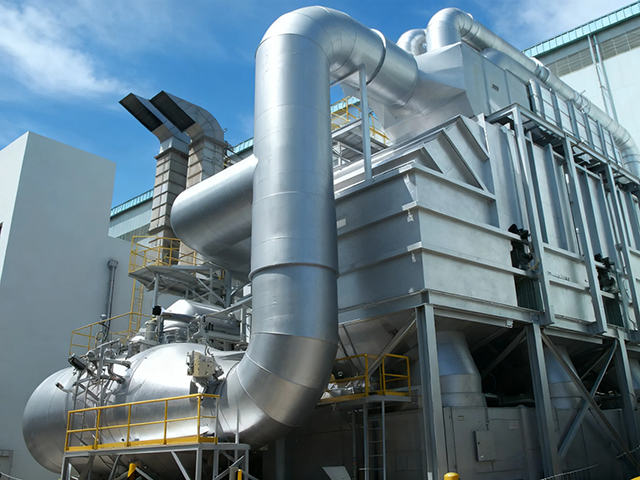
Regenerative Thermal Oxidizers stand out as the preferred emission control solution for industrial applications because they:
- Deliver industry-leading thermal (up to 97%) and destruction (up to 99.9%) efficiencies.
- Minimize operating costs through heat recovery, reducing fuel consumption.
- Ensure compliance with global clean air regulations.
- Offer flexibility in size, configuration, and customization.
- Provide long-term reliability with durable components and minimal maintenance.
Whether you’re looking to reduce emissions, cut energy costs, or meet regulatory requirements, an RTO is a sustainable, cost-effective solution tailored to industrial needs.