
For decades, corporate dress codes have required professional women to wear high heels to project authority and competence, often at the cost of physical comfort and health.. Across Silicon Valley boardrooms, Wall Street conference rooms, and startup accelerators worldwide, female entrepreneurs are abandoning the traditional power heel in favor of something unexpected: premium ballet flats that prioritize performance over pain.
This shift represents more than a fashion trend. As women increasingly launch their own companies and develop into leaders, they’re rewriting the rules about professional appearance and workplace authority. At the center of this movement are Tieks, Italian-crafted flats that have become the unofficial uniform of female founders who refuse to let uncomfortable footwear limit their ambitions.
The change reflects broader transformations in business culture, where authentic leadership and sustainable performance significantly outweigh outdated dress codes that prioritize appearance over capability.
The Physical Cost of Traditional Power Dressing
Research from the American Academy of Orthopedic Surgeons reveals that prolonged heel wearing can lead to shortened calf muscles, altered gait patterns, and increased risk of ankle injuries. For female entrepreneurs who often work 12-16 hour days, these physical limitations create genuine professional obstacles.
Consider the typical day of a venture-backed startup founder: 6 AM gym session, breakfast pitch meeting, back-to-back investor calls, afternoon team meetings, evening networking events, then late-night strategy sessions. Traditional business heels simply weren’t designed for this level of endurance, yet professional appearance expectations remained unchanged until recently.
The psychological impact extends beyond physical discomfort. When mental energy is diverted to managing foot pain during crucial negotiations or lengthy board meetings, peak performance becomes impossible. Harvard Business Review research indicates that physical comfort directly correlates with decision-making capacity and leadership effectiveness.
Female entrepreneurs, with the autonomy to set their own standards, began questioning why professional success should require personal suffering. This questioning led many to discover premium alternatives that delivered both credibility and comfort.
The Italian Solution to American Business Problems
Tieks’ backstory parallels the entrepreneurial journey of many of their customers. Founded by CEO, Kfir Gavrieli, with no fashion experience, the company spent two years developing the perfect foldable flat for women tired of stuffing flip-flops into their bags after long workdays.
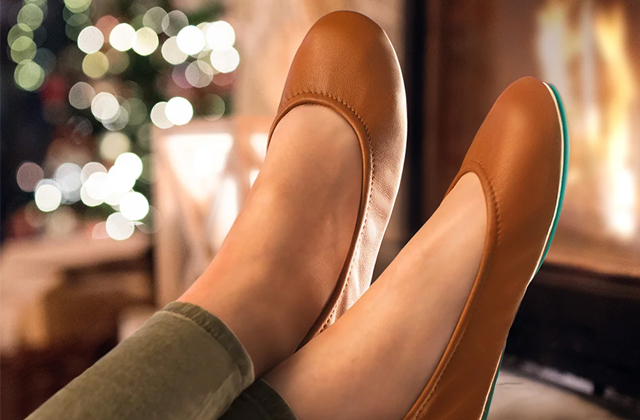
The 150-step process of crafting Tieks creates shoes that meet the stylistic demands of professional environments while providing genuine all-day comfort. Each pair features premium leather, split-sole construction for flexibility, and cushioned backs that prevent heel slippage and rubbing common in traditional flats.
The signature Tiek Blue sole has become a subtle status symbol among female executives, instantly recognizable to those in the know while remaining professional enough for conservative corporate environments. This discreet signaling appeals to women who want to project both style consciousness and practical intelligence.
Price points ranging from $195-$370 position Tieks as investment pieces rather than disposable fashion, aligning with the long-term thinking that characterizes successful entrepreneurs. The durability reports of 3-8 years of wear with regular use make the cost-per-wear calculation favorable for professional women who previously replaced cheaper shoes multiple times annually.
Industry-Specific Adoption Patterns
Technology sector adoption has been particularly strong, where the culture of optimization and disruption extends to personal choices. Female founders in Silicon Valley appreciate Tieks’ engineering approach to footwear comfort, viewing them as performance equipment rather than mere accessories.
Venture capital and finance present different challenges, where conservative appearance standards remain more entrenched. However, even in these traditional sectors, successful female entrepreneurs report that confidence stemming from physical comfort ultimately matters more than adherence to outdated expectations.
The consulting and professional services industries occupy the middle ground, where client-facing roles require polished presentation but long hours demand practical considerations. Many female consultants discover that Tieks provide the sophistication needed for C-suite meetings while enabling the mobility required for extensive travel and site visits.
Healthcare and biotech entrepreneurs face unique demands combining scientific credibility with business acumen. The clean, professional aesthetic of Tieks suits laboratory and clinical environments while providing comfort for long research days and investment presentations.
Economic Analysis of the Professional Footwear Investment
For female entrepreneurs, every business decision requires ROI analysis, including seemingly personal choices like footwear. Customer testimonials consistently report that Tieks enable longer productive workdays, fewer breaks for foot relief, and sustained energy through marathon business sessions.
The versatility factor provides additional economic benefits. A single pair of well-chosen Tieks can handle morning investor meetings, afternoon team sessions, and evening networking events without requiring outfit changes or backup shoes. This consolidation reduces both wardrobe costs and decision fatigue.
Travel considerations become crucial for entrepreneurs managing multiple locations or frequent investor visits. The foldable design allows packing multiple color options in the space of a single traditional shoes, enabling consistent professional appearance across different contexts while minimizing luggage requirements.
Hidden costs of traditional business footwear include productivity losses from discomfort, medical expenses from foot problems, and opportunity costs from limiting activities due to footwear constraints. These factors rarely appear in purchasing decisions but significantly impact total cost of ownership.
Cultural Shift in Professional Image Standards
The rise of female entrepreneurs wearing Tieks signals broader changes in how business competence is evaluated. Traditional power dressing assumed that professional credibility required visible sacrifice and discomfort. The new paradigm suggests that sustainable performance and authentic confidence matter more than adherence to arbitrary appearance standards.
This evolution particularly benefits women-led companies where authentic leadership and employee well-being take precedence over traditional corporate norms. r. Female founders who prioritize comfort and practicality often extend these values throughout their organizational cultures.
Social media amplification has accelerated this trend. Instagram posts featuring successful female entrepreneurs in Tieks normalize the combination of professional achievement with practical footwear choices, inspiring other women to reconsider their own compromises.
The generational component cannot be ignored. Millennial and Gen Z female entrepreneurs, raised with different expectations about work-life integration, naturally reject artificial barriers between personal comfort and professional success.
International Perspectives and Global Adoption
European business culture, with its emphasis on quality craftsmanship and practical luxury, has embraced the Tieks phenomenon differently than American markets. Italian manufacturing heritage resonates particularly well with European female executives who appreciate artisanal quality and sustainable fashion choices.
Asian markets present mixed adoption patterns, where traditional formality expectations compete with modern entrepreneurial values. However, female founders in tech hubs like Singapore and Hong Kong increasingly choose comfort-forward professional attire as they build companies with global ambitions.
The remote work revolution has further accelerated this trend, as video conferencing eliminates the need for full professional appearance while maintaining requirements for polished presentation from the waist up. This shift enables greater focus on comfort and performance in footwear choices.
Future Implications for Professional Footwear
The success of Tieks among female entrepreneurs has validated demand for performance-oriented professional footwear, encouraging both established brands and startups to develop competing solutions. This competition will likely drive innovation in comfort technology, sustainable materials, and inclusive sizing.
The broader trend toward authenticity and sustainability in business culture supports continued growth of the comfort-first professional footwear movement. As more female entrepreneurs achieve visible success while wearing Tieks, the legitimacy of prioritizing performance over traditional appearance standards will strengthen.
However, true transformation requires systemic change in how professional competence is evaluated across all industries. The Tieks phenomenon represents progress, but complete elimination of appearance-based discrimination requires broader cultural acceptance beyond individual footwear choices.
For current and aspiring female entrepreneurs, the choice to wear Tieks represents more than a footwear preference. It signals commitment to sustainable performance, rejection of arbitrary limitations, and confidence in prioritizing authentic success over conventional expectations. In breaking the heel ceiling, these women are also breaking barriers to their own unlimited potential.