
My Indian-American heritage played a pivotal role in my evolution from cancer researcher turned biotech entrepreneur to leader of an innovative cancer-fighting charitable platform, Music Beats Cancer. Today, I draw strength from my diversity, but that wasn’t always the case.
Mona Jhaveri’s Indian-American childhood
Both my parents immigrated to America from India. My father is a Muslim-Indian, and my mother, a Hindu-Indian. This unique diversity was a challenge growing up, but proved to be a strength in my personal and professional evolution.
I was not raised as a Muslim or a Hindu. My parents decided to bring me up culturally as an “American.” I was not entirely exposed to the respective languages, foods, customs, or traditions of my mother country. While I technically belonged to both communities, practically speaking, I belonged to neither. This void was felt (although unspoken) as a child growing up in a primarily white American suburb.
Mona Jhaveri explores her Indian-American roots
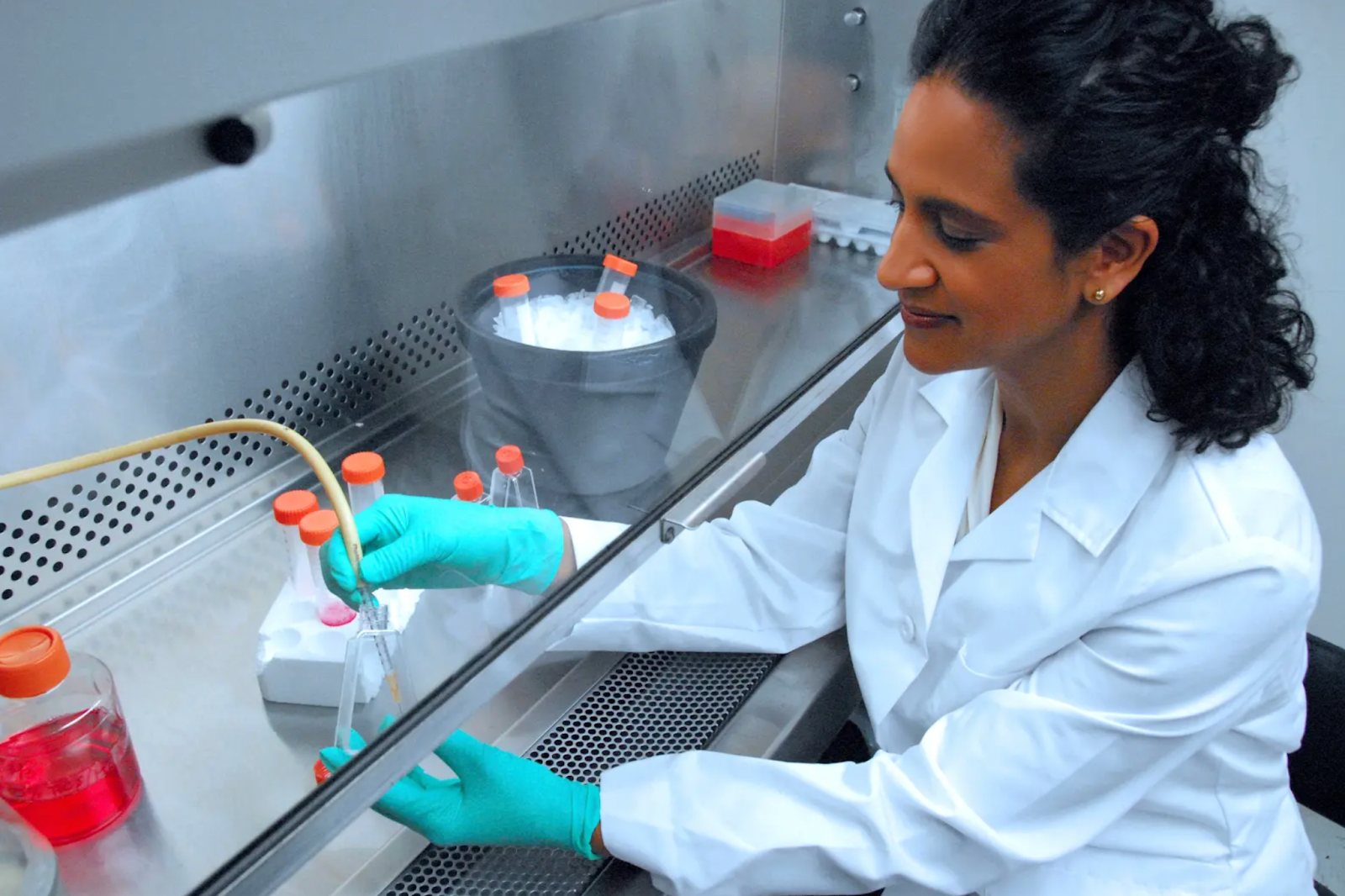
As a young adult in my early 20s, the cultural and ethnic void grew, as did my curiosity about my respective Indian backgrounds. I took the bold move to visit India independently to introduce myself to my family, both the Hindu and Muslim sides. I wanted to get a “hands-on” understanding of where I came from and the forces that perhaps were currently driving my journey as a cancer researcher. Visiting my family in India for the first time, I was unprepared for the complexities and discomforts I would encounter as I shifted between my Muslim and Hindu families. My father’s side, as orthodox Muslims, implemented strict Muslim laws, like covering your head as a woman, facing Mecca when you slept, and observing the call for prayers five times a day. My mother’s side, who are well-to-do Brahmin Hindus, differed radically. Showing your affinity to certain gods (Ganesha in our case) and your upstanding place in society was imperative to participating in family life. Increasingly, I got better at wearing these multiple cultural hats as I adapted to two very different environments. I found strength and unique insight in my colorful, not-so-straightforward heritage.
Embracing the diversity in her heritage empowers Dr. Mona Jhaveri
Ultimately, the skills I gained while experiencing my opposing Indian cultures gave me unique dexterity in other departments of life, especially my career. As a doctoral and postdoctoral candidate of biochemistry, the world of academia consumed me. I became fluent in the language and culture of basic research.
Eventually, I explored what lay outside the boundaries of academic research. As it happened, during my postdoctoral training, my colleagues and I discovered (by accident) that treating cancer cells with small DNA pieces targeting the folate receptor could selectively kill these malignant cells. After witnessing this novel phenomenon repeatedly, we believed our findings could be extrapolated to real-world cancer therapy.
However, advancing a lab discovery to the clinic is a monumental task fraught with enormous risk and too often failure. This path would require me to leave the academic space and become a fluent biotech entrepreneur. Of course, at the time, there were no handbooks or training courses that could help me through this transition. Yet, I was undeterred. I believed there was something more for me personally and professionally — and I already had practice in traversing radically different worlds. I would establish Foligo Therapeutics, Inc., a biotech start-up dedicated to advancing our novel DNA molecules to the clinic.
Culturally, the world of entrepreneurship is vastly different from academia, especially when it comes to raising money. As a biotech leader, the academic grants and support systems were no longer available. Successful fundraising became a function of your business plan, your pitch, and most importantly, your network. Needless to say, as a young academic turned biotech entrepreneur, I was at a grave disadvantage. While I could play the game somewhat successfully, the inevitable was in front of view — the Valley of Death. This is a metaphorical term used to describe the funding bottleneck between research discoveries and their translation into real medicine.
Eventually, our funding dried up, forcing me to shut down Foligo Therapeutics. Interestingly, I was not alone in the Valley of Death experience. Hundreds of promising biotech solutions never reach the patients who desperately need them, simply due to a lack of critical funding for these early-stage ideas. This reality was not only wasteful for biotech companies, but tragic for our public, who wish to see better healthcare outcomes, especially for diseases like cancer, where, for some aspects of cancer care, progress has been stagnant.
No public effort was directly confronting the Valley of Death issue. Of course, this was understandable because the Valley of Death was something the public was not necessarily aware of. How could they be? Biotech is a relatively new industry. Its language and process are foreign to a public that has been fighting the war on cancer through charitable drives for “research for the cure.”
It was a bold (and radical!) move to start an entirely new public initiative that would serve to bridge the Valley of Death for hundreds of biotech entrepreneurs. In 2014, I formally launched Music Beats Cancer, a charitable crowdfunding platform exclusively for biotech entrepreneurs working on biotech solutions for cancer. The idea is to create a path for biotech entrepreneurs to raise a round of “non-dilutive” funds from charitable donors while simultaneously enabling the public to learn and get behind worthy solutions for cancer.
Initially, the initiative was wholly rejected by charitable funders and biotech entrepreneurs alike. It was confusing and uncomfortable for both stakeholders. The public could not understand the terminology of the unengaging entrepreneurs who were fearful of diluting their work should they speak about it in simple “layperson” terms. I was witnessing yet another culture clash. I realized the skill of bridging these disparate worlds would become paramount to our platform’s success. Drawing from my own experience of being divided as an Indian-American of Hindu and Muslim descent, as well as a researcher turned biotech entrepreneur, I found an uncharted niche to claim — the interface between popular culture and science. Here is where I made the strategic decision to capitalize on the partnerships of independent musicians — all over the world. Hence, Music Beats Cancer not only forged routes between science and people but also crossed physical and cultural boundaries, making us a truly global movement in the war on cancer.
Today, Music Beats Cancer is a growing force of forward-thinking innovators, enlightened donors, and hundreds of change-making musicians from all over the world sharing our mission as well as the detriments of the Valley of Death funding issue. I will never know exactly how this unlikely concoction formed in support of one common purpose. I’d like to believe that my own diverse cultural and professional backgrounds played a part in my ability, as leader of Music Beats Cancer, to think and act far outside the box of what’s possible.