
Eczema (or atopic dermatitis) is a chronic inflammatory skin condition traditionally associated with childhood. However, for a growing number of individuals, the intense, persistent itch and inflamed skin only appear for the first time in adulthood. This phenomenon, known as adult-onset eczema, can be particularly confusing and disruptive, as the symptoms often differ from those seen in children, frequently appearing on the hands, feet, neck, or around the eyes.
While mild cases may be managed with over-the-counter moisturisers and basic skin care, the chronic and often severe nature of adult eczema often indicates a deeper immune or skin barrier dysfunction that requires expert, sophisticated care. Stopping the painful itch-scratch cycle and achieving long-term remission requires a precise diagnosis and access to prescription-only treatments.
Knowing when to stop relying on self-care and consult a specialist is crucial for management, preventing severe complications, and significantly improving your quality of life.
Here are the critical signs that your adult-onset eczema requires professional evaluation by an eczema doctor Singapore:
I. Warning Signs That Self-Care is Failing
1. Persistent Symptoms Despite Aggressive Home Care
If you have been diligently using over-the-counter emollients, frequent moisturising, and low-strength topical steroid creams for several weeks without seeing sustained improvement, it indicates that the underlying inflammation is not being adequately controlled.
- No Remission: Eczema is a chronic condition characterized by flare-up cycles. If your skin remains constantly inflamed, dry, or intensely itchy without a period of remission, your current treatment is failing.
- Over-Reliance on Steroids: If you find yourself needing to apply medium-to-strong topical steroid creams daily or multiple times a week just to keep symptoms at bay, you are at risk of steroid-related side effects, such as skin thinning (atrophy) and rebound flares. A specialist must intervene to introduce steroid-sparing alternatives.
2. Severe Impact on Quality of Life (QoL)
The constant, unyielding itch (pruritus) of eczema profoundly affects mental health, sleep, and self-esteem. When the symptoms begin to control your daily life, a specialist consultation is essential.
- Chronic Sleep Deprivation: The hallmark of moderate-to-severe eczema is intense nocturnal itching, often waking you repeatedly. If your eczema consistently causes you to lose sleep, the resulting chronic fatigue and stress worsen the inflammatory cycle.
- Mental Health Strain: Eczema is strongly linked to heightened anxiety, stress, depression, and social isolation. If the appearance of your skin or the inability to stop scratching causes you to withdraw from social activities or experience significant mood changes, you need a systemic treatment plan that addresses both the physical discomfort and the emotional burden.
- Interference with Daily Life: If your eczema—especially on high-visibility areas like the hands, feet, face, or neck—interferes with your ability to perform tasks at work, wear specific clothing, or engage in hobbies, it has progressed beyond mild status.
II. Acute Medical and Diagnostic Red Flags
These signs indicate potential complications or misdiagnosis, demanding immediate specialist attention.
3. Signs of Acute Skin Infection
Scratching breaks the skin barrier, creating open wounds susceptible to bacterial colonization, most commonly by Staphylococcus aureus. Infections require prescription antibiotics or antivirals.
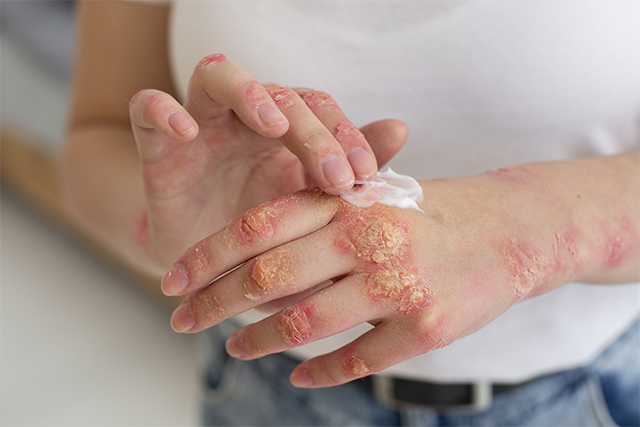
- Oozing, Weeping, or Crusts: Look for fluid-filled blisters that ooze clear or yellowish fluid, or the appearance of thick, honey-coloured crusting on the inflamed patches. This is a common sign of a bacterial infection.
- Increased Pain, Warmth, or Spreading: If the affected skin patches suddenly become warm to the touch, swollen, unusually painful, or spread rapidly beyond the original boundary, seek prompt medical treatment.
- Systemic Symptoms: Any accompanying fever, chills, or general malaise along with a skin flare may indicate a serious, widespread infection requiring urgent hospital attention.
4. Atypical Presentation or Diagnostic Uncertainty
Adult-onset eczema can closely mimic other conditions. An accurate diagnosis by an accredited dermatologist is essential, as misdiagnosis leads to ineffective treatment.
- Atypical Location: While children often get eczema in skin folds (elbows, knees), adults frequently develop patches on the hands (hand eczema), feet, eyelids, and nipples. If the rash is unusual, such as coin-shaped patches (nummular eczema) or deep, itchy blisters on the hands (dyshidrotic eczema), a specialist is needed for correct identification.
- Need for Testing: Only a dermatologist can accurately perform and interpret diagnostic procedures like Patch Testing to definitively rule out allergic contact dermatitis (eczema caused by contact with specific allergens like nickel, fragrances, or rubber chemicals), which is a common trigger for adult eczema.
5. Progression to Lichenification and Scarring
Lichenification is the thickening and hardening of the skin caused by years of chronic rubbing and scratching.
- Leathery Texture: If the affected skin feels thick, dry, and leathery, the inflammatory process is deeply entrenched. This skin is permanently itchy and resists simple moisturisers. Reversing lichenification requires potent, anti-inflammatory therapies that a general practitioner (GP) cannot typically prescribe.
- Discolouration: Severe, chronic inflammation often leads to post-inflammatory hyperpigmentation (darkening) or hypopigmentation (lightening), especially noticeable in darker skin tones. A specialist is required to treat the inflammation aggressively enough to halt these long-term cosmetic changes.
III. The Specialist’s Advantage: Advanced Treatment in Singapore
Consulting an accredited dermatologist is necessary because they are the only physicians authorised to prescribe and manage the advanced, targeted therapies proven effective for moderate-to-severe eczema. Treatment in Singapore generally follows a stepped-care approach, progressing from topical care to systemic therapies.
6. Access to Advanced Topical and Systemic Medications
The specialist’s arsenal extends far beyond basic topical steroids.
- Steroid-Sparing Topicals: These include Topical Calcineurin Inhibitors (TCIs like Tacrolimus/Pimecrolimus) and Topical PDE-4 Inhibitors (like Crisaborole), which reduce inflammation without the risk of skin thinning, making them ideal for sensitive areas like the face and eyelids.
- Oral Immunosuppressants: For severe, widespread cases, conventional systemic drugs like Cyclosporine or Methotrexate may be used for a short duration to regain control of the flare-up.
- JAK Inhibitors: Newer oral medications, Janus Kinase (JAK) Inhibitors (e.g., Upadacitinib, Abrocitinib), target specific pathways within immune cells to rapidly reduce itching and inflammation. These are highly effective for severe eczema but require specialist monitoring.
7. Biologic Therapies (Precision Injections)
Biologics represent the most significant breakthrough for chronic, moderate-to-severe eczema that has not responded to other treatments.
- Targeted Action: Biologic drugs, such as Dupilumab, are monoclonal antibodies that work by blocking specific immune proteins (like Interleukin-4 and Interleukin-13) that drive the inflammation in eczema.
- Safety Profile: Delivered via subcutaneous injection, biologics are targeted, leading to fewer systemic side effects compared to older oral immunosuppressants. Crucially, in Singapore, these therapies can only be prescribed and managed by a certified dermatologist.
8. Phototherapy (Light Therapy)
For widespread or stubborn eczema patches, phototherapy offers a drug-free alternative or complementary treatment.
- Narrowband UVB (NB-UVB): This involves controlled exposure to specific wavelengths of ultraviolet light. It works by suppressing overactive immune cells in the skin to reduce inflammation and itching.
- Specialist Setting: Phototherapy requires specialized clinic equipment and careful monitoring by a dermatologist to determine the correct dosage and frequency (usually 2-3 times per week) to ensure safety and prevent burning or long-term skin damage.
Frequently Asked Questions (FAQ)
Q1: Is it normal to get eczema for the first time as an adult?
A: Yes. While it’s most common in children, up to 1 in 12 adults can develop eczema for the first time, known as adult-onset atopic dermatitis. It can be triggered by stress, environmental factors, hormonal changes (like menopause), or exposure to new contact allergens.
Q2: How is adult eczema different from childhood eczema?
A: In adults, eczema patches tend to be thicker, drier, and more scaly (lichenified). They often appear in different locations, such as the back of the neck, face (especially around the eyes), and hands and feet, rather than just the inner elbows and knees.
Q3: What tests will a specialist perform to diagnose my adult eczema?
A: A specialist will perform a comprehensive physical examination and medical history. They may also perform Patch Testing (to check for contact allergies) or, rarely, a Skin Biopsy to rule out other inflammatory skin conditions like psoriasis or cutaneous lymphoma.
Q4: Can I use my child’s eczema creams?
A: You should only use creams prescribed for you. While some moisturizers are safe, your adult eczema, especially if chronic, often requires higher-potency prescription creams or non-steroidal agents that are not safe or appropriate for a child’s delicate skin.
Q5: Will a systemic treatment (like Biologics) permanently cure my eczema?
A: Currently, there is no permanent cure for eczema. Biologics and other systemic treatments are designed to control the inflammation, induce long-term remission, and dramatically improve your quality of life. They are used for chronic management, not cure.
Conclusion
Adult-onset eczema is a serious, chronic disease that often requires dedicated, advanced medical intervention to control. The appearance of severe symptoms—chronic sleep disruption, uncontrolled itching, signs of infection, or extensive body involvement—are not signs of personal failure, but clear signals that you have progressed to a stage where over-the-counter care is ineffective.
By consulting an experienced eczema doctor in Singapore accredited dermatologist, you gain access to accurate diagnosis, advanced systemic therapies like Biologics and JAK Inhibitors, and monitored treatments like Phototherapy. Taking this step is essential to break the persistent itch-scratch cycle and achieve lasting comfort and health.