
Sometimes the ocean delivers creatures that look like they were designed to star in your worst nightmare. And sometimes rarely it hands us something so oddly adorable that the internet immediately agrees: protect this little guy at all costs.
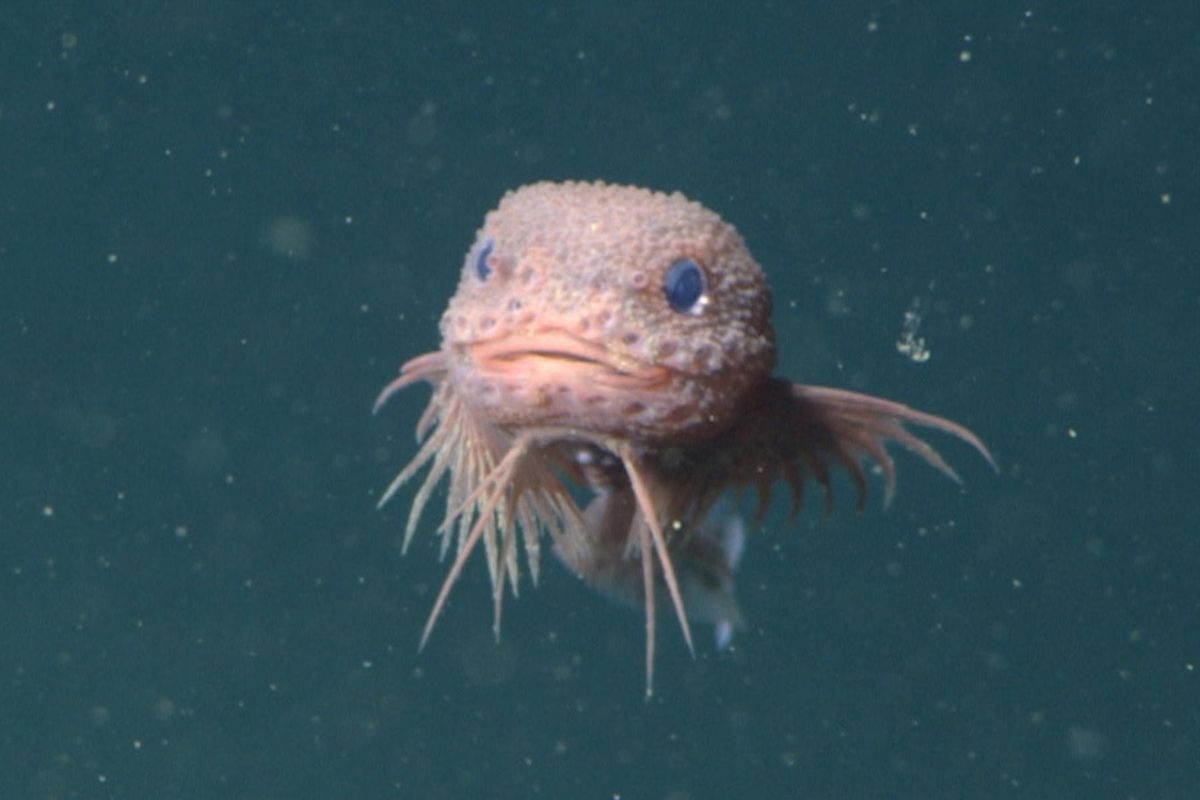
Say hello to “Bumpy”, a pink, knobbly deep-sea snailfish with big eyes, a soft “smile,” and the kind of face that feels like it belongs in the next Animal Crossing game. But behind the meme-worthy charm is a serious scientific story: Bumpy is one of three newly described snailfish species discovered at crushing depths off the coast of California a reminder that the deep ocean is still largely unknown, even as industries are increasingly interested in exploiting it.
Three new snailfish species found where sunlight never reaches
Researchers working with MBARI (Monterey Bay Aquarium Research Institute) and collaborators described three new-to-science abyssal snailfishes found in the eastern Pacific, at depths of roughly 3,268-4,119 meters (10,722-13,514 feet).
The trio includes:
-
Bumpy snailfish (Careproctus colliculi) pink, rounded, and textured like a tiny underwater mochi with bumps.
-
Dark snailfish (Careproctus yanceyi) fully black with a round head and horizontal mouth.
-
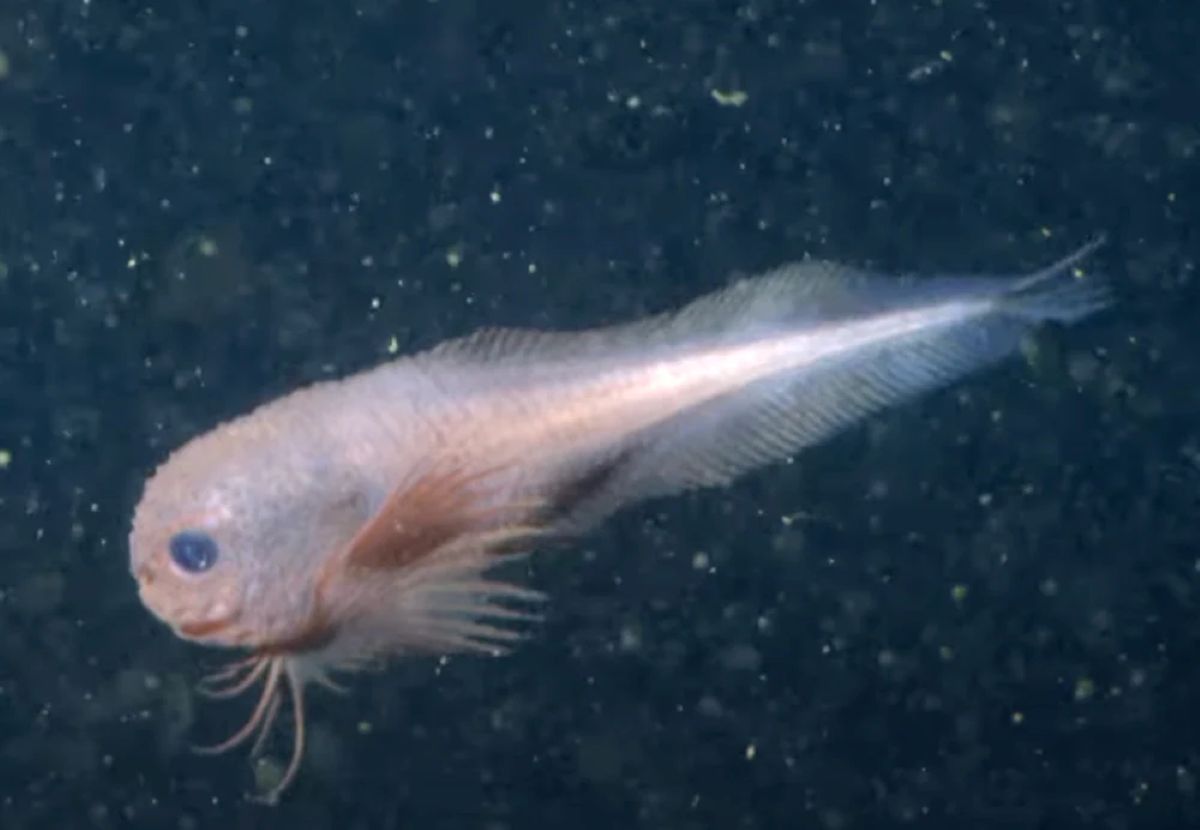
Sleek snailfish (Paraliparis em) longer-bodied and more streamlined than its “cousins.”
“Bumpy” was first observed during deep-sea exploration footage (recorded in 2019), then later confirmed as a distinct species through careful morphological work and genetic analysisbecause in the deep ocean, looking similar is not the same as being the same.
How do you even “meet” a fish at 13,000 feet?
The deep sea doesn’t exactly allow casual snorkeling. Scientists rely on remotely operated vehicles (ROVs) and advanced imaging tools to explore habitats that are otherwise unreachable. In this case, MBARI’s ROV Doc Ricketts helped reveal the environment these fish call home dark, cold, and under immense pressure.
What makes this exciting isn’t just the “aww” factor. It’s the fact that each expedition keeps showing us the same thing: the abyss is not empty it’s alive, diverse, and full of surprises we’re only beginning to catalog.
Snailfish are survival masters, even when they look squishy
Snailfishes (family Liparidae) have a reputation for being soft-bodied and… well, a bit gelatinous. But that “squishy” look is part of their superpower: these fish are built to handle extreme pressure and cold in ways many animals simply can’t.
At shallower depths, many snailfish species have a suction disk on their underside that lets them cling to rocks or kelp and sometimes even other animals. In deeper habitats, that same adaptation can help them anchor to the seabed or latch onto whatever stable surface exists a practical strategy when currents and food availability can be unpredictable.
In Bumpy’s case, scientists documented features that help distinguish it from close relatives like its pink coloration in life and specific fin-ray counts details that matter a lot in taxonomy, where one tiny difference can separate “new species” from “known species.”
Cute discovery, serious warning: we’re racing to exploit what we barely understand
Here’s the part that turns this from a viral creature feature into a bigger conversation: the deep sea is increasingly targeted for resource extraction, including minerals linked to modern technology supply chains. Scientists emphasize that we still don’t know enough about deep-ocean ecosystems to predict how disturbance will ripple through them especially because deep-sea habitats can be slow to recover.
That’s why biodiversity monitoring matters. If you can’t recognize what “normal” looks like, you can’t detect what’s being lost. Every species described yes, even a tiny pink fish with a goofy grin is a data point that improves our ability to notice change before it becomes irreversible.
Why “Bumpy” went viral and why that’s not a bad thing
There’s something powerful about a creature that makes people feel wonder instead of fear. The deep ocean often feels distant and abstract until a single, oddly cute animal becomes a gateway into the reality that we’ve mapped space better than we’ve mapped the seafloor and we’re still discovering “neighbors” on our own planet.
So yes, you can smile at Bumpy’s tiny face. But also let it land as a message: the abyss is not a blank zone. It’s a living world one that deserves curiosity, caution, and protection.